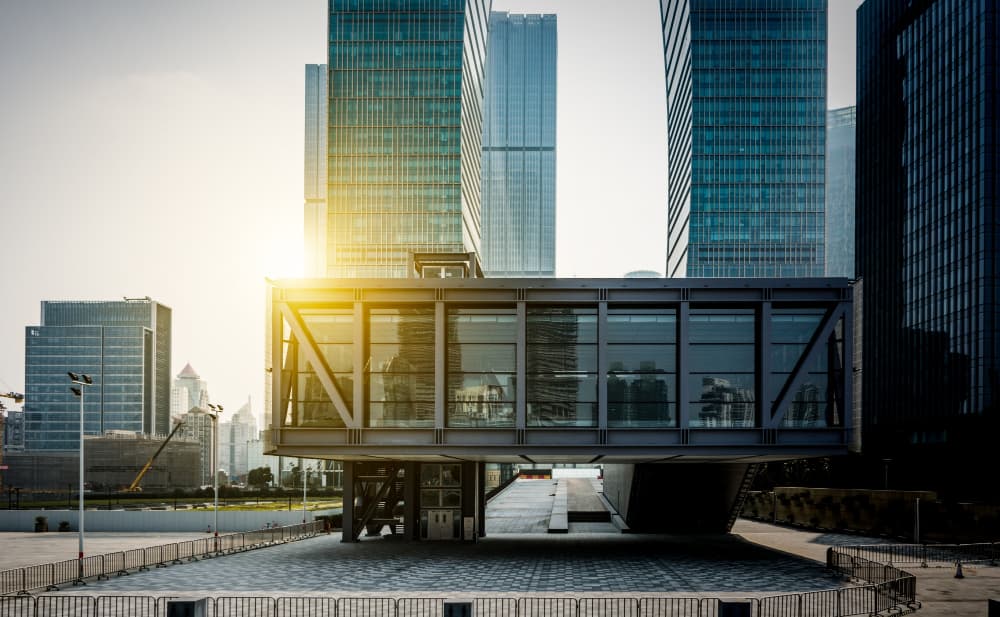
The city is a theatre of forms, lines and materials. Among them, aluminum stands out quietly, omnipresent in contemporary urban furniture. Few urban photographers consciously focus on it, yet this lightweight, durable and versatile metal offers a fascinating subject for the lens. Photographing aluminum is about revealing the aesthetics of the everyday — where industrial design meets urban poetry.
Table of Contents
One of aluminum’s most subtle charms lies in how it interacts with light. Depending on its surface — polished, brushed, anodized or weathered — it absorbs or reflects light in unique ways. At dawn or dusk, it takes on a soft, almost fluid look; under harsh daylight, it can become bright, even blinding.
It’s an ideal subject for photographers who are drawn to contrast and reflections. A brushed aluminum sign becomes a partial mirror; an anodized public trash bin reflects surrounding colors; a matte handrail absorbs the shadows of passersby. Aluminum doesn’t impose itself — it adapts, blends in, and transforms. It becomes a silent actor in the urban scenes we capture.
The photographer’s eye can also pause on what the city often overlooks: texture. Aluminum offers a wealth of micro-reliefs, industrial lines, traces of wear or raindrops — all of which tell a different story of the urban environment. A worn railing, a scratched bench, a weathered sign: these details are fragments to be captured, perfect for macro photography or close-up shots.
In black and white, aluminum surfaces provide a great canvas for gray scales, soft transitions and sharp contrasts. In color, they reflect their environment — sky, foliage, neon lights. A single aluminum lamppost, seen from the right angle, can turn into a striking graphic composition.
Repetition — of shapes, modules or street furniture — is another way aluminum reveals its visual potential. Photographing a row of bollards, a line of benches or a pattern of fixtures allows for strong, almost abstract compositions.
In a world saturated with images and visual noise, the photographer’s eye often seeks refuge in simplicity. Aluminum, by nature, lends itself perfectly to minimalist urban photography. It’s a neutral, unadorned material that offers clean lines, geometric shapes and smooth surfaces. It’s the ideal partner for stripped-down compositions where every element has purpose.
Playing with empty space around an aluminum detail, framing a lone bench in a paved plaza, isolating a post in a concrete field — all these choices speak of a quieter city, contemplative in nature. Minimalism becomes a way to resist the noise, to observe slowly, to bring meaning back to the ordinary.
Photographing aluminum in the city is not about glorifying urban furniture — it’s about learning to see differently. Where others pass without noticing, the attentive lens captures light, texture, and line, and reveals a discreet beauty, almost hidden. Far from spectacular clichés or sensationalism, this type of photography invites us to slow down, to embrace nuance, and to discover the poetry in industrial form.
Aluminum may be just a material, but for those who know how to see it, it becomes a subject, a visual thread, a language of its own. And that’s where the true magic of photography lies.

The Christmas Markets: A Visual Journey to the Heart of Festive Magic Christmas markets, true ephemeral gems of the festive period, offer a multitude of captivating opportunities for photography enthusiasts. Capturing the warm atmosphere, colorful stalls and charming details of these markets requires an artistic and technical approach. Here are some tips to transform your […]

For journalists and photographers, workspace is essential for creativity and productivity. However, it is time to say goodbye to standardized functionalism and create a working environment that combines comfort and efficiency. In this article, we’ll show you how you can transform your office into a comfortable workspace by using second-hand furniture and adopting an eco-responsible […]
Idée cadeau pour lui, maroquinerie française à découvrir
Fête des pères


